|
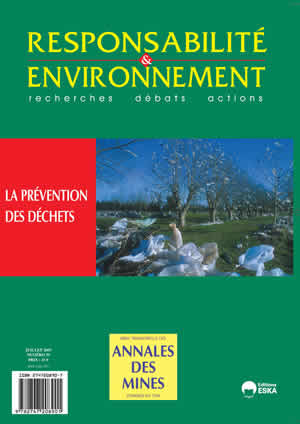
 N° 39 - July 2005 - Preventing wastes N° 39 - July 2005 - Preventing wastes
To read summaries, click on the article titles
Editorial: François Valérian,
Rédacteur en chef des Annales des Mines
Foreword
Directeur de la prévention des pollutions et des risques
Ministère de l'Ecologie et du Développement durable
Drafting and implementing a national plan for preventing the production of wastes
Daniel Béguin
Directeur Déchets et Sols Ademe
et
Virginie Rocheteau
Ingénieur au Département Prévention Recyclage,
Organisation des Filières en charge de la coordination du projet "prévention" Ademe
France Nature Environnement’s point of view
Liliane Elsen
Réseau déchets de France Nature Environnement
Prevention in France’s policy of waste management: The Assises de La Baule
Jean -Luc Straczek
Ministère de l'Economie, des Finances et de l'Industrie
Direction de l'Action régionale, de la qualité et de la sécurité industrielle (DARQSI)
On preventing wastes
An interview with Roselyne Bachelot-Narquin
Députée au Parlement européen,
Ancienne Ministre de l'Ecologie et du Développement durable
Wastes and sustainable development
Rémi Guillet
Conseil général des Mines
Environmentally friendly production and waste prevention in the packaging industry
Olivier Labasse
Conseil national de l'emballage
Environmentally friendly design and an automobile-maker’s efforts to avoid a negative environmental impact: What criteria? What place for waste prevention?
François Marie
Direction de la Politique environnement de Renault
Pilote du système de management de l'éco-conception
Imagining a new relation to consumption: The “economics of functionality”
Nicolas Buclet
Chercheur au CREIDD
Stop plastic bags!
Serge Orru,
Président des Amis du Vent
assisté de Pascale Boyer et Cécile Jaraudias
Plastic bags: The manufacturers’ approach
Françoise Gerardi
Chambre syndicale des emballages en matière plastique
From fighting against incineration to preventing wastes: CNIID’s actions for informing and involving the public
Florence Couraud
CNIID
Advertisement flyers in mail boxes: The road to waste prevention will be hard and long!
Jacques Pélissard
Président de l'Association des maires de France
The concept of the “producer’s broadened responsibility” and the reduction of consumer wastes at the origin
Matthieu Glachant
Cerna, Ecole des Mines de Paris
Setting prices for public services, an efficient waste-prevention tool ?
Olivier Arnold
Chargé de mission déchets
Direction des études économiques et de l'évaluation environnementale
Ministère de l'Ecologie et du Développement durable
Local waste management and waste prevention
Francis Chalot
Vice-Président du Siredom, maire de Janville
and
Bruno Genty
Administrateur de France Nature Environnement, consultant en prévention de la production des déchets
Local authorities’ actions for preventing wastes: Taking stock in Europe
Francis Radermaker
Association des cités et régions pour le recyclage et la gestion durable
The Paris Waste-Prevention Plan
Jean-Marc Bourdin
Directeur, Direction de la protection de l'Environnement
and
Arnaud Lange
Ingénieur en charge du plan prévention
Repairing and reusing household appliances: A way to prevent wastes and to advance toward sustainable development
Jean-Luc Tissier
Délégué général, Fédération Envie
Centers for recycling resources: Reuse, a sustainable development method
Sylvie Chappelet
Responsable du réseau Recycleries-ressourceries
|